
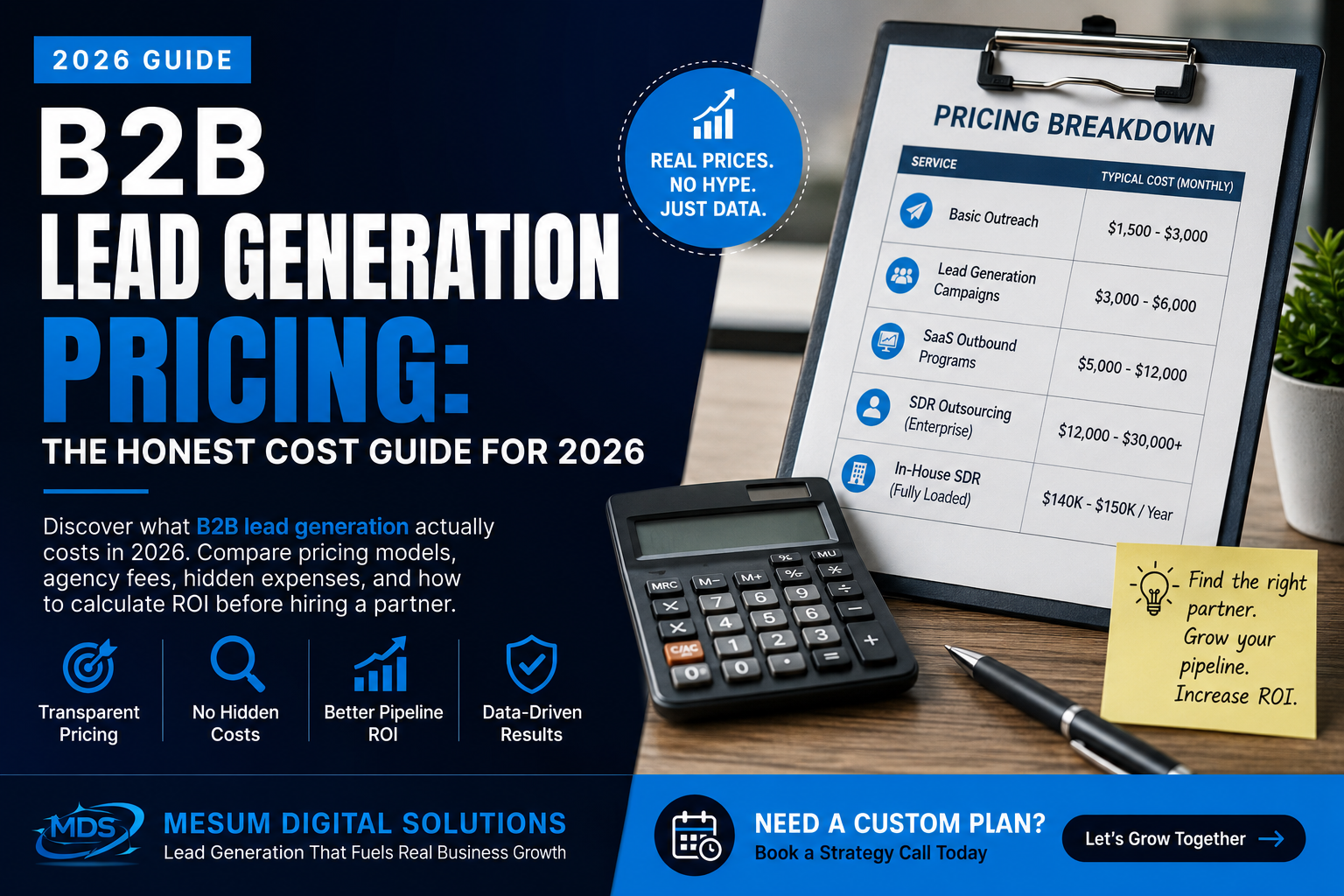
Most B2B companies don’t struggle with finding lead generation agencies. They struggle with figuring out what’s actually worth paying for. One agency quotes $2,500/month. Another says $12,000. A third promises “pay only for results.” Meanwhile, your sales pipeline is slowing down, your SDRs are overloaded, and leadership wants predictable growth without burning budget. We’ve seen this confusion constantly. The problem isn’t just pricing. It’s that most agencies hide how their pricing actually works. So here’s a transparent breakdown of what B2B lead generation really costs in 2026, what’s included, where companies overspend, and how to evaluate whether an agency is actually capable of delivering pipeline. Why Lead Generation Pricing Is All Over the Place Two agencies can charge the same monthly fee and deliver completely different outcomes. One sends scraped contact lists and generic cold emails. The other: builds ICP-targeted prospect databases verifies contacts manually warms domains correctly personalizes outreach handles follow-ups books qualified meetings Same label. Completely different operation. That’s why pricing ranges vary so aggressively. The 4 Main Pricing Models Used by Lead Generation Agencies
- Monthly Retainer This is the most common model. You pay a fixed monthly fee for: lead research outreach appointment setting reporting campaign management Typical range: Small agencies: $2,000–$5,000/month Mid-market agencies: $5,000–$12,000/month Enterprise-focused firms: $15,000+ Good for: predictable pipeline building long-term outbound programs ongoing optimization Risk: Some agencies lock clients into retainers while doing minimal work after onboarding.
- Cost Per Lead (CPL) You pay for each lead delivered. Example: $40 per lead $120 per verified contact $300 per qualified lead Sounds attractive initially. The issue? Volume often becomes more important than quality. We’ve audited campaigns where teams received thousands of “leads” that never replied once. Cheap CPL usually means: scraped data poor targeting low buying intent
- Cost Per Appointment (CPA) This model charges per booked meeting. Typical ranges: $150–$800 per meeting sometimes higher for enterprise SaaS This is one of the better models when qualification standards are clear. But here’s where teams get burned: Some agencies count any booked call as success, even if: the prospect isn’t qualified no budget exists decision-makers aren’t involved the meeting no-shows The metric that actually matters: held meetings qualified pipeline revenue influence Not calendar invites.
- Pay-for-Performance This is usually marketed aggressively. “No risk.” “Guaranteed meetings.” “Only pay for results.” Sometimes legitimate. Often dangerous. Because to scale pure performance pricing profitably, many providers: prioritize quantity over quality use aggressive automation ignore brand reputation blast low-quality outreach If something sounds unrealistically cheap, there’s usually a reason. What Does B2B Lead Generation Actually Cost in 2026? Here’s the realistic market range right now. Service Type Typical Monthly Cost Basic outreach setup $1,500–$3,000 SMB outbound campaigns $3,000–$6,000 SaaS outbound programs $5,000–$12,000 Enterprise SDR outsourcing $12,000–$30,000+ In-house SDR fully loaded cost $140K–$150K/year Most companies underestimate how expensive in-house prospecting actually becomes. Salary is only part of it. You’re also paying for: recruiting onboarding SDR management tools data providers email infrastructure training turnover ramp time The average SDR ramp period is still around 3+ months. And many leave within 14–18 months. That turnover destroys pipeline consistency. The Hidden Costs Nobody Talks About This is where budgets quietly disappear. Bad Data A cheap list can destroy: deliverability sender reputation reply rates We’ve seen campaigns hit 15% bounce rates because data wasn’t verified properly. Once domains get damaged, recovery becomes expensive and slow. Deliverability Infrastructure Cold outreach in 2026 is technical. You now need: SPF DKIM DMARC domain warm-up mailbox rotation sending limits inbox monitoring Skipping this is one of the fastest ways to land in spam. SDR Management Overhead Founders often assume: “We’ll just hire one SDR.” Then reality hits. That SDR still needs: scripts ICP guidance QA reporting lead sourcing tooling coaching Without operational systems, performance becomes inconsistent fast. When Outsourced Lead Generation Makes Sense Outsourcing usually works best when: you need pipeline quickly internal sales teams are overloaded outbound expertise doesn’t exist internally you want flexibility without hiring risk you need specialized execution Especially for: SaaS agencies fintech B2B services real estate startups approaching growth stages When In-House Is Better Not every company should outsource. In-house can make more sense if: outbound is already mature you have strong sales leadership you need deep product specialization you’re building long-term internal sales infrastructure The strongest teams often use hybrid systems: outsourced prospecting internal closers That combination works surprisingly well. Red Flags in Agency Pricing If you’re evaluating agencies, watch for these immediately. “Unlimited leads” Usually low quality. No explanation of data sourcing Bad sign. Ask: how leads are verified where data comes from how often databases are refreshed No deliverability discussion Massive red flag in 2026. Any serious outreach agency should discuss: inbox placement domain setup bounce rates sender reputation If they don’t mention these, they probably aren’t managing them properly. Unrealistic guarantees Nobody can guarantee: exact reply rates exact meetings exact revenue Because market conditions, offer quality, ICP fit, and timing all matter. Transparent agencies explain variables instead of making fantasy promises. How To Calculate Whether Lead Generation Is Worth It Simple framework: Plain text Average Deal Size × Close Rate = Revenue Per Meeting Example: average deal = $8,000 close rate = 20% That means each qualified meeting is worth: $1,600 expected revenue If meetings cost: $250–$500 each …the economics can work very well. The mistake most companies make: they evaluate lead gen cost without evaluating pipeline value. What We’ve Learned Running Outreach Campaigns The campaigns that perform best usually have three things: Tight ICP definition Broad targeting kills reply rates. Specificity wins. Verified data Accurate contacts dramatically improve: deliverability engagement conversions Multi-channel outreach Email alone is no longer enough. The strongest campaigns combine: email LinkedIn strategic follow-ups light calling That coordination matters more than volume now. Questions You Should Ask Before Hiring Any Lead Generation Agency How do you verify lead data? What deliverability systems do you use? What’s included in pricing? Who writes messaging? How are meetings qualified? What industries have you worked with? How long before first meetings typically appear? What metrics do you track besides appointments? How do you handle no-shows? Can you show real campaign benchmarks? If answers are vague, move on. Final Thoughts The cheapest lead generation option usually becomes the most expensive later. Because fixing: damaged domains poor targeting spam reputation bad data weak positioning costs far more than doing outbound correctly from the beginning. The agencies creating predictable pipeline growth in 2026 aren’t just sending emails. They’re operating structured systems: accurate data strong targeting deliverability infrastructure multi-channel execution consistent optimization That’s where real ROI comes from.